Talavine
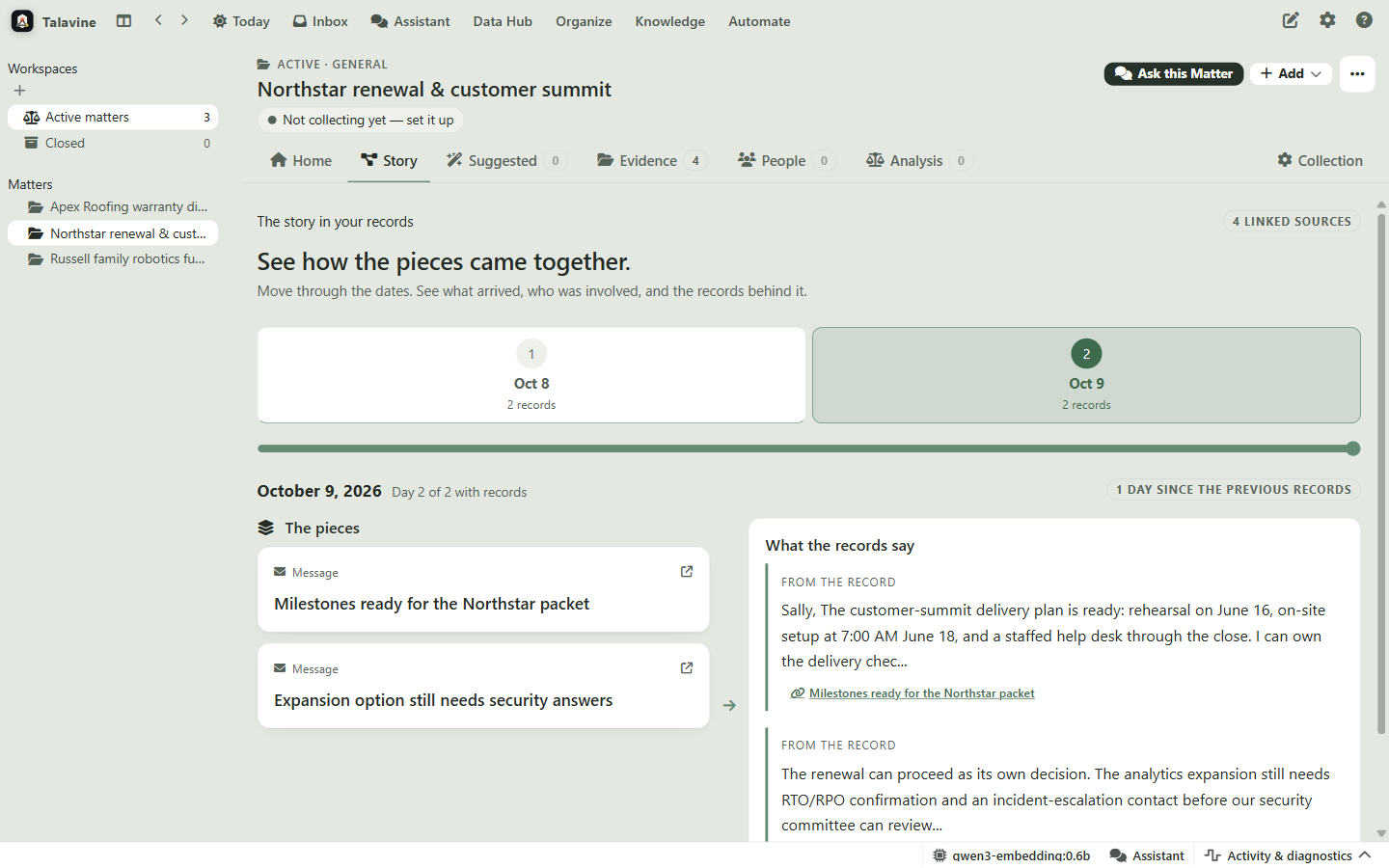
I built a desktop workspace that brings client email and notes together so you can open the records behind an AI answer.
See the client workspace talavine.
AI can get a first version running quickly. It takes an experienced developer to design for the way your business works, review what AI builds, and test what happens when things go off script.
I’ve spent more than 30 years building business software for banks, manufacturers, and service companies. My work spans software architecture, database design, and user interfaces, all in service of making real business processes easier to run and automate.
A prompt can describe the result you want. A working system also needs decisions about which records to trust, who can change them, and what people should see when something goes wrong. I’ll work through those decisions with you, then review and test what we build against the way your team actually works.
Here’s what I’ve been building, from a workspace that keeps the evidence close to an open-source tool for working with AI on code. The screenshots use demo data.
I built a desktop workspace that brings client email and notes together so you can open the records behind an AI answer.
See the client workspace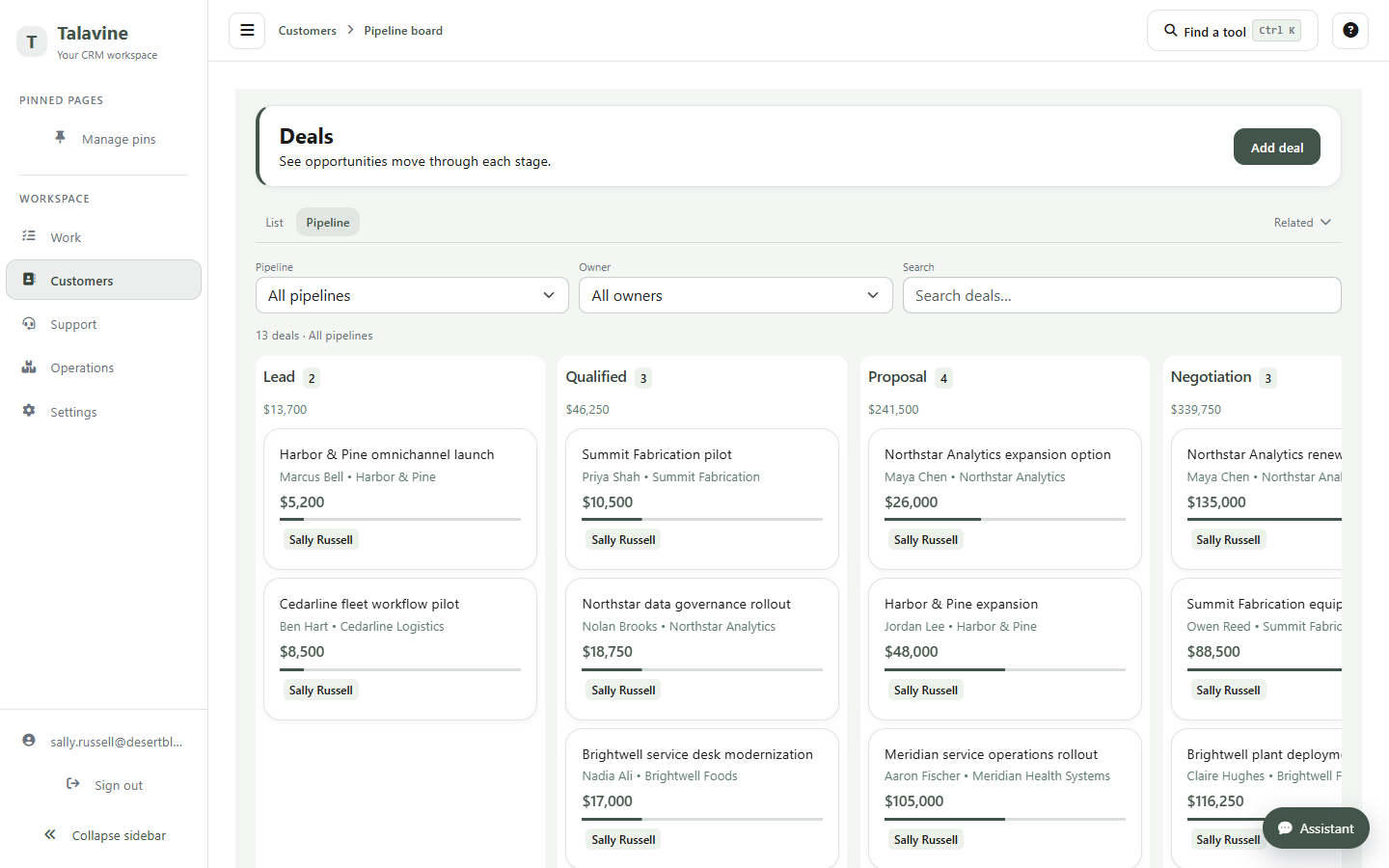
I built a shared workspace that keeps customer records, deal stages, and follow-up tasks together so the team can see where a deal stands.
Explore the CRM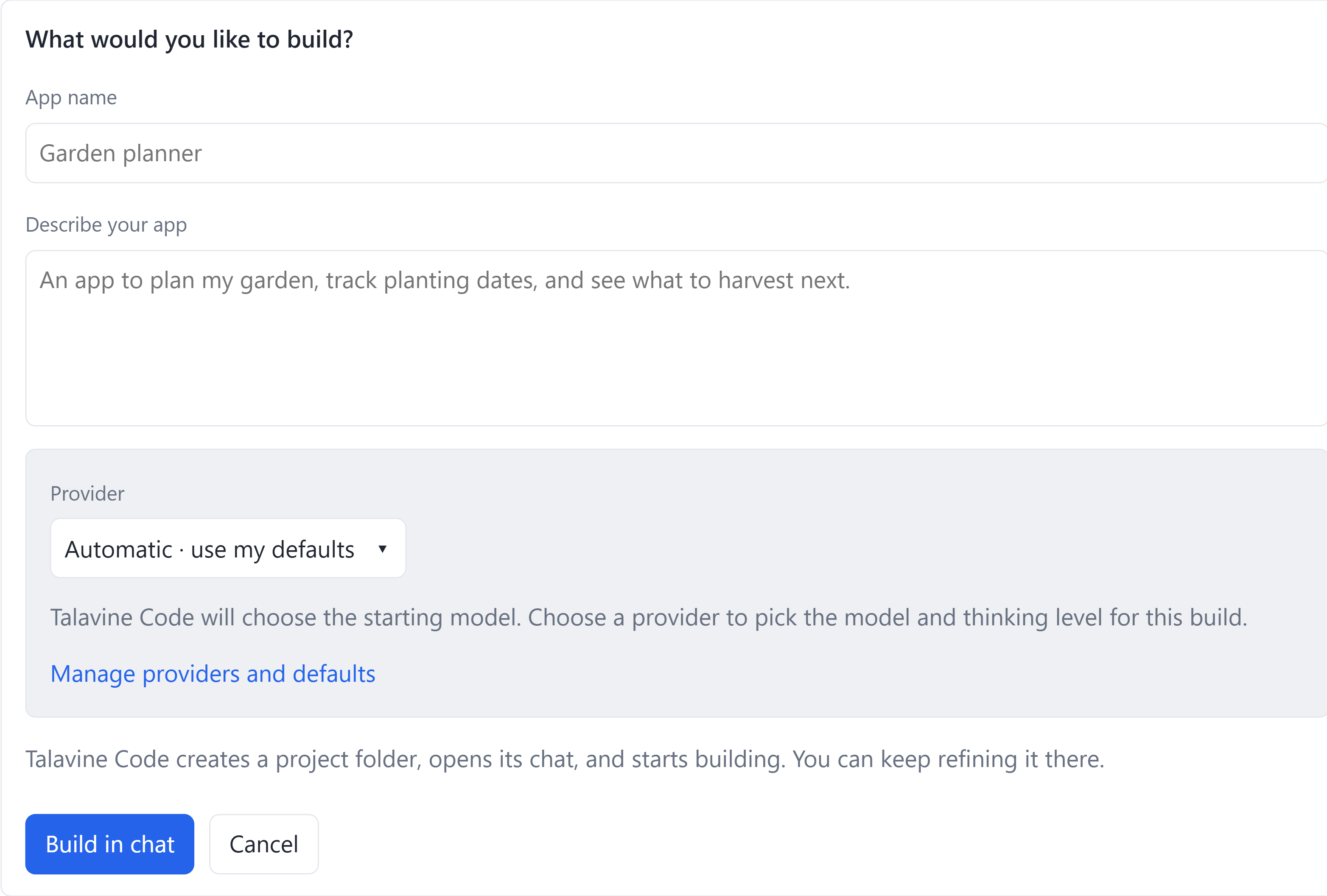
I built an open-source tool that lets developers work with AI in their own codebase, inspect changes, and run tests.
Explore Talavine Code on GitHubConnect forms and inboxes to your CRM, match requests to existing contacts, and make sure the right person knows to follow up.
Send a duplicate request, try one with missing details, and simulate a CRM outage. Check what gets saved and when a teammate needs to step in.
Pull recent emails, meeting notes, and open questions into a client briefing that links to the original records.
Give the workflow an old deadline and a newer correction. Check that the briefing uses the current date and flags any unresolved approvals.
Bring a spreadsheet or an AI-built prototype. We’ll work out what to keep and design the data and screens around the people doing the job.
Import a sample of your existing records and walk through a real handoff. Check that the next person sees what’s due and has the right access.
We look at who does the work, which tools they use, and where they get stuck.
We settle the scope, cost, and what a successful first run looks like before work starts.
We check it against real examples and walk through how your team will run it and handle exceptions.
A few lines are enough. Tell me what you’re trying to do, what you’ve tried so far, and what you’d like to happen next.